Brachioradialis: origin, insertion, nerve supply and action
Quick answer
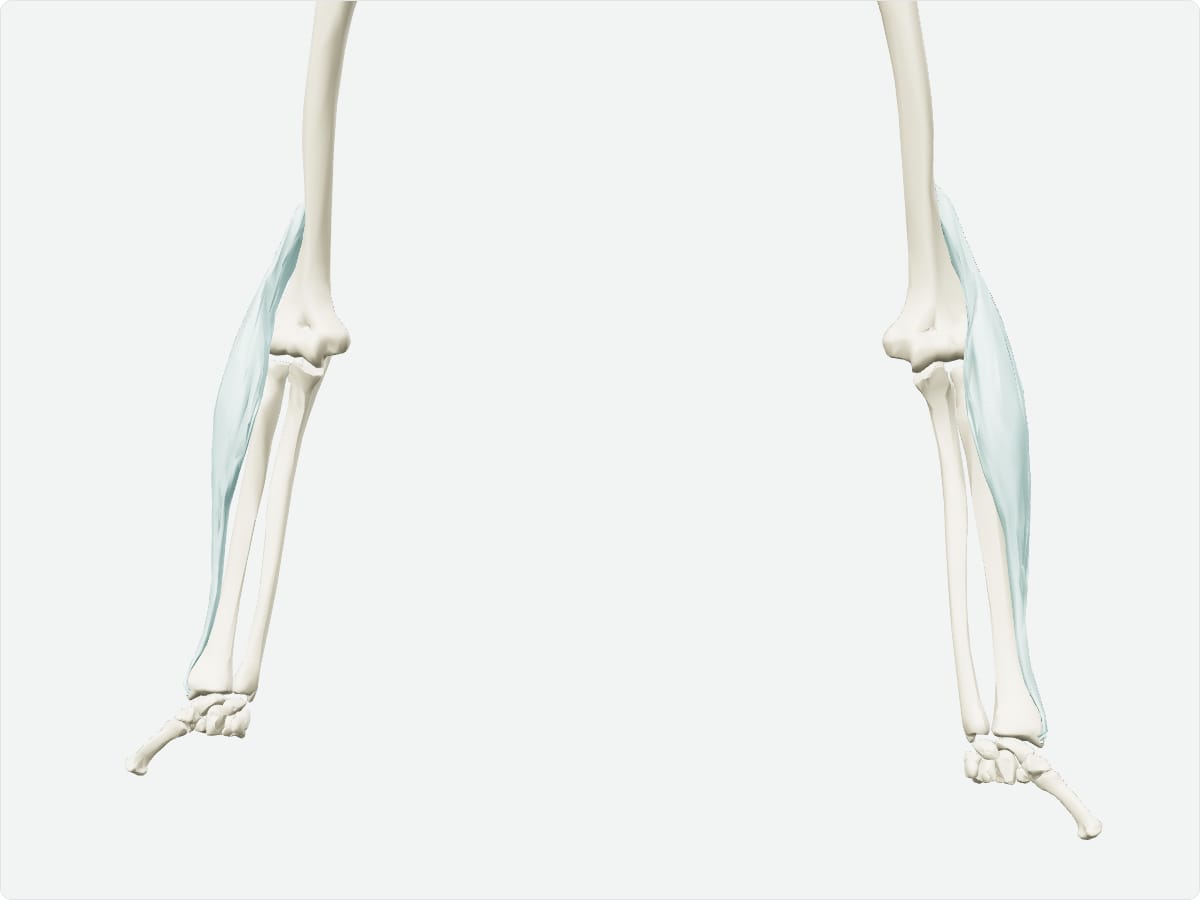
The brachioradialis is a superficial muscle on the radial side of the forearm. It arises from the lateral supracondylar ridge of the humerus and inserts near the styloid process of the radius. The radial nerve supplies it, and it flexes the elbow, especially when the forearm is in the neutral position.
Key facts
Origin
Proximal two thirds of the lateral supracondylar ridge of the humerus.
Insertion
Lateral surface of the distal radius, near the styloid process.
Innervation
Radial nerve (C5-C6).
Blood supply
Radial recurrent artery.
Action
Flexes the elbow, most effective in the mid-prone (thumb-up) position.
3D model: BodyParts3D (CC BY 4.0), adult male reference anatomy. Highlighted structure shown with nearby bones for context.
About the brachioradialis
The brachioradialis is unusual because it belongs to the posterior (extensor) compartment by nerve supply but lies in front of the elbow and flexes it. It forms the lateral border of the cubital fossa.
Clinical relevance
The brachioradialis reflex tests spinal segments C5-C6.
Radial nerve injury above the elbow weakens this muscle, together with the wrist and finger extensors.
Frequently asked questions
Why is the brachioradialis supplied by the radial nerve if it flexes the elbow?
It develops from the extensor compartment of the forearm, so it keeps its radial nerve supply even though it acts as an elbow flexor.
Which reflex tests the brachioradialis?
The brachioradialis (supinator) reflex, which tests spinal segments C5-C6.