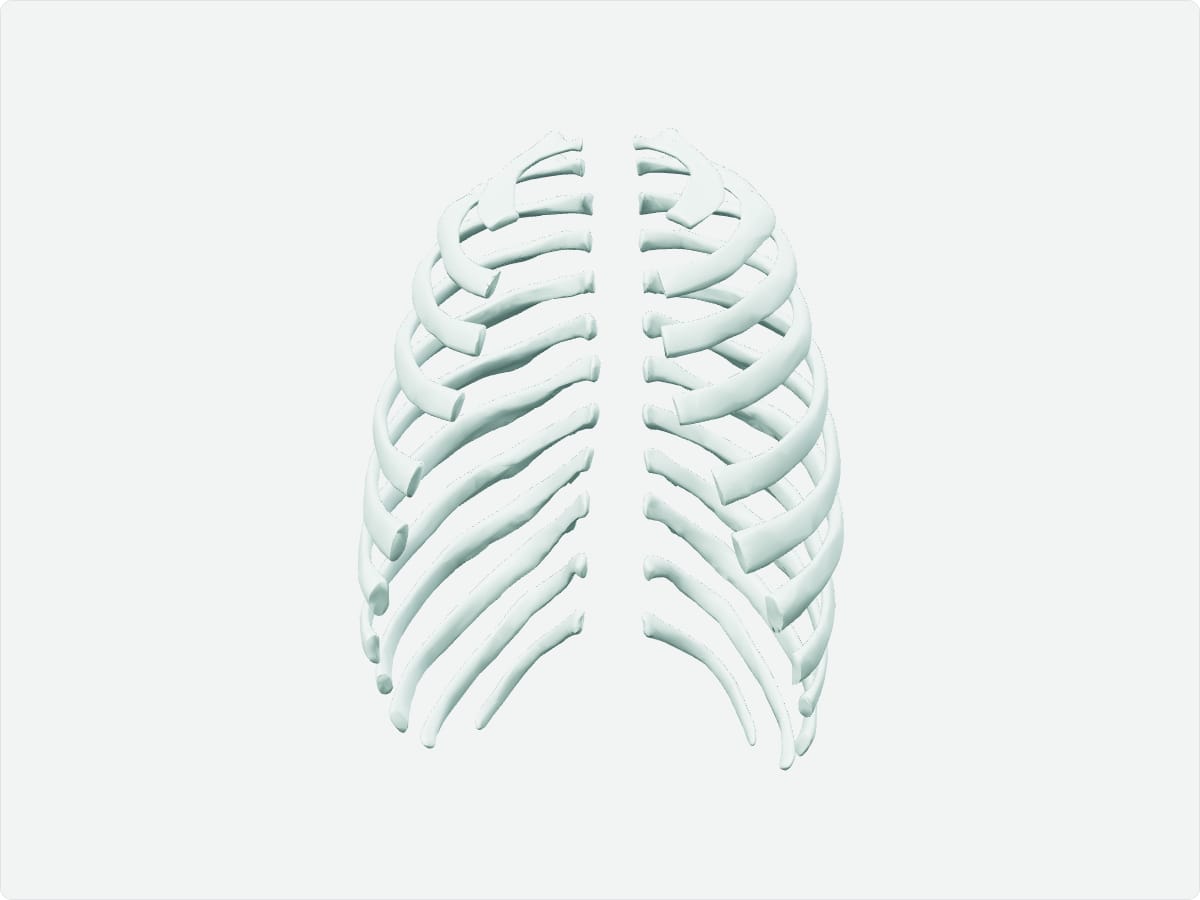
Humans have twelve pairs of ribs forming the rib cage with the thoracic vertebrae and sternum. The upper seven pairs are true ribs attached directly to the sternum, ribs eight to ten are false ribs attached through the costal cartilage above, and the last two pairs are floating ribs without a front attachment.
Key facts
Type
Flat, curved bones.
Location
Thoracic wall, articulating with thoracic vertebrae posteriorly.
3D model: BodyParts3D (CC BY 4.0), adult male reference anatomy. Highlighted structure shown with nearby bones for context.
About the ribs
Ribs move in a bucket-handle and pump-handle fashion during breathing. The neurovascular bundle runs in the costal groove on the inferior border of each rib.
Clinical relevance
Rib fractures usually affect ribs four to nine.
Fractures of the lower ribs can injure the spleen or liver.
Frequently asked questions
How many ribs do humans have?
Twelve pairs, or 24 in total.
What are floating ribs?
Ribs eleven and twelve, which do not connect to the sternum or to the cartilage of the rib above.