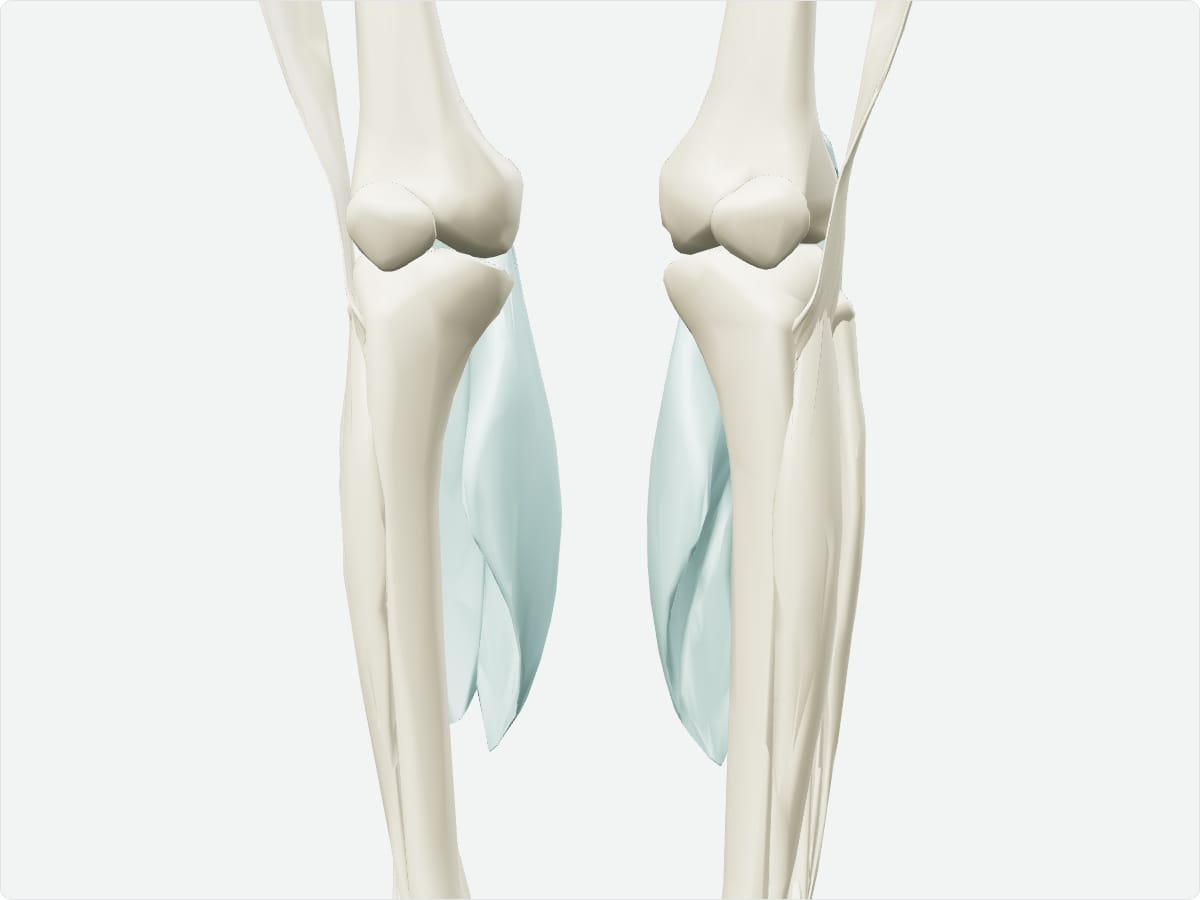
Gastrocnemius: origin, insertion, nerve supply and action
Also called: calf muscle
Quick answer
The gastrocnemius is the superficial two-headed calf muscle. Its heads arise from the medial and lateral femoral condyles and join the soleus in the calcaneal (Achilles) tendon, which inserts on the calcaneus. The tibial nerve supplies it, and it plantarflexes the ankle and helps flex the knee.
Key facts
Origin
Medial head: medial condyle of the femur. Lateral head: lateral condyle of the femur.
Insertion
Posterior surface of the calcaneus via the calcaneal tendon.
Innervation
Tibial nerve (S1-S2).
Blood supply
Sural arteries from the popliteal artery.
Action
Plantarflexes the ankle and flexes the knee; the muscle is most effective with the knee extended.
3D model: BodyParts3D (CC BY 4.0), adult male reference anatomy. Highlighted structure shown with nearby bones for context.
About the gastrocnemius
The two heads form the lower border of the popliteal fossa. The gastrocnemius and soleus together are called the triceps surae.
Clinical relevance
Achilles tendon rupture can be detected with the Thompson (calf squeeze) test.
A sudden tear of the medial head is called tennis leg.
Frequently asked questions
What are the origin and insertion of gastrocnemius?
It arises from the femoral condyles and inserts on the calcaneus through the Achilles tendon.
What is the triceps surae?
The combination of the gastrocnemius and the soleus.