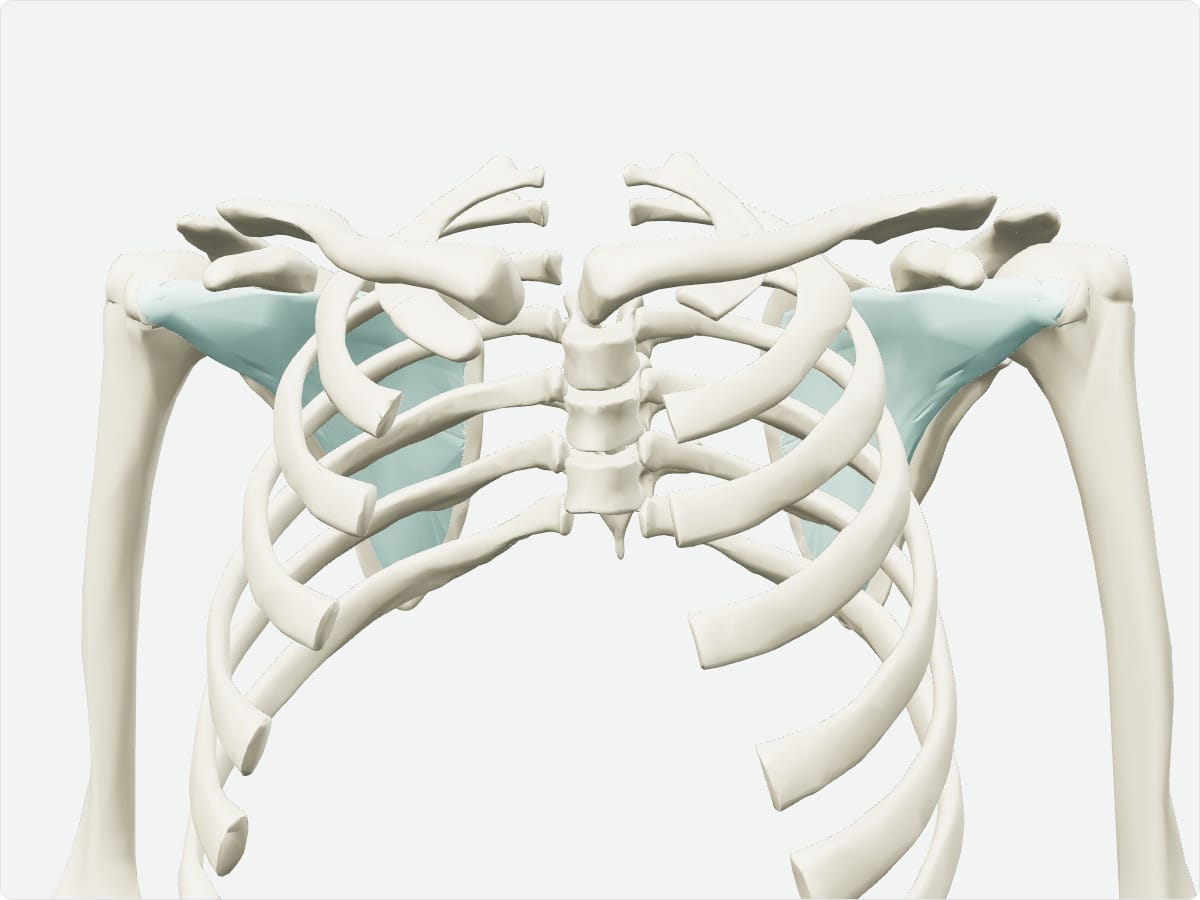
Subscapularis: origin, insertion, nerve supply and action
Also called: subscapularis muscle
Quick answer
The subscapularis is the largest rotator cuff muscle and lies on the front of the scapula. It arises from the subscapular fossa and inserts on the lesser tubercle of the humerus. The upper and lower subscapular nerves supply it, and it medially rotates the arm and stabilises the shoulder against forward dislocation.
Key facts
Origin
Subscapular fossa on the costal surface of the scapula.
Insertion
Lesser tubercle of the humerus.
Innervation
Upper and lower subscapular nerves (C5-C7).
Blood supply
Subscapular artery and dorsal scapular artery branches.
Action
Medially rotates the arm; stabilises the humeral head anteriorly.
3D model: BodyParts3D (CC BY 4.0), adult male reference anatomy. Highlighted structure shown with nearby bones for context.
About the subscapularis
The subscapularis forms part of the posterior wall of the axilla. Its tendon passes in front of the shoulder joint and is separated from the scapular neck by the subscapular bursa.
It is the only rotator cuff muscle on the anterior surface of the scapula.
Clinical relevance
Subscapularis tears are less common than supraspinatus tears but can occur with anterior dislocations; the lift-off and belly-press tests assess the muscle.
Frequently asked questions
What does the subscapularis do?
It medially rotates the arm and helps hold the head of the humerus in the socket.