Skip to content
Anatly

Scapula: anatomy, landmarks and articulations

Also called: shoulder blade

Quick answer

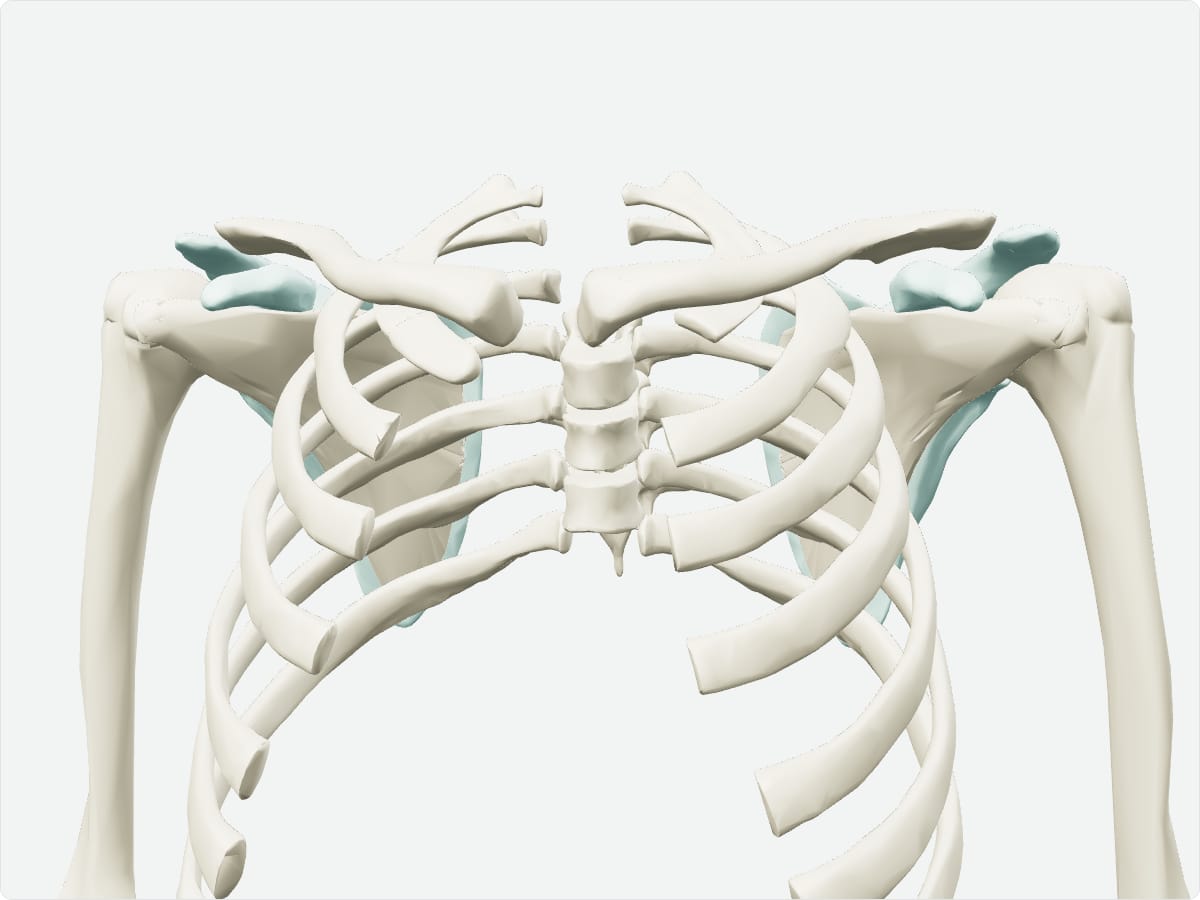
The scapula, or shoulder blade, is a flat triangular bone on the back of the thorax. It carries the glenoid cavity for the humerus, the acromion that articulates with the clavicle and the coracoid process. Its posterior surface has a spine dividing the supraspinous and infraspinous fossae.

Key facts

TypeFlat bone.
LocationPosterior thorax, overlying ribs 2 to 7.
LandmarksSpine, acromion, coracoid process, glenoid cavity, supraspinous fossa, infraspinous fossa, subscapular fossa, superior, inferior and lateral angles, medial and lateral borders, infraglenoid and supraglenoid tubercles.
ArticulationsHumerus (glenohumeral joint) and clavicle (acromioclavicular joint).
Muscle attachmentsRotator cuff muscles, teres major, deltoid, trapezius, rhomboids, levator scapulae, serratus anterior, pectoralis minor, biceps and triceps.
3D model of the scapula shown with nearby bones

3D model: BodyParts3D (CC BY 4.0), adult male reference anatomy. Highlighted structure shown with nearby bones for context.

About the scapula

The scapula glides over the thoracic wall and has no bony connection to the trunk except through the clavicle, which gives the shoulder its mobility.

Clinical relevance

Frequently asked questions

What are the main landmarks of the scapula?

The spine, acromion, coracoid process, glenoid cavity and the supraspinous, infraspinous and subscapular fossae.

How is the scapula attached to the body?

Only by muscles and by the acromioclavicular joint with the clavicle.

Test yourself

Upper limb bone quiz

Practise origins, insertions, nerve supply and locations with instant feedback.

Explore in context

Open the scapula in the full 3D atlas

Toggle body systems, explode the model and inspect every neighbouring structure.