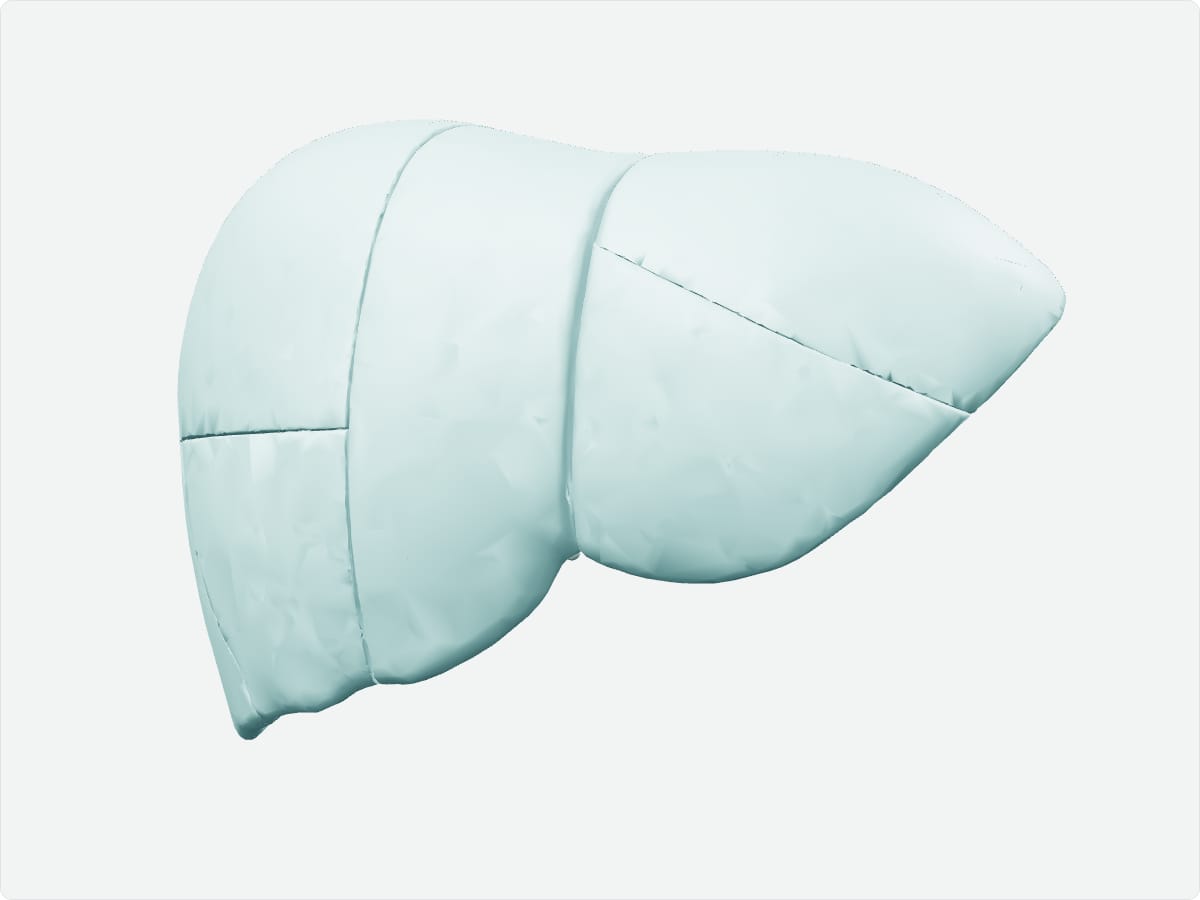
The liver is the largest internal organ, located in the right upper abdomen beneath the diaphragm. It produces bile, processes nutrients absorbed from the gut, stores glycogen and makes plasma proteins. It receives blood from both the hepatic artery and the portal vein, and it is divided into right and left lobes and eight functional segments.
Key facts
Location
Right upper quadrant, under the right dome of the diaphragm, protected by the lower ribs.
Structure
Right, left, caudate and quadrate lobes; eight Couinaud segments; hepatic ducts joining to form the common hepatic duct.
Function
Bile production, metabolism of carbohydrates, fats and proteins, detoxification, storage of glycogen, vitamins and iron.
Blood supply
Dual supply: hepatic artery proper (about 25 percent) and portal vein (about 75 percent); drained by hepatic veins into the inferior vena cava.
Innervation
Hepatic plexus (sympathetic and parasympathetic) and right phrenic nerve fibres to the capsule.
3D model: BodyParts3D (CC BY 4.0), adult male reference anatomy. Highlighted structure shown with nearby bones for context.
About the liver
The portal triad of the portal vein, hepatic artery and bile duct enters at the porta hepatis. Bile is stored and concentrated in the gallbladder before entering the duodenum.
Clinical relevance
Cirrhosis replaces normal liver tissue with fibrous scar and raises portal vein pressure.
Pain from the liver capsule can be referred to the right shoulder.
Frequently asked questions
What are the functions of the liver?
Bile production, metabolism, detoxification, storage and synthesis of plasma proteins.
Why does the liver have two blood supplies?
The hepatic artery brings oxygen-rich blood, while the portal vein brings nutrient-rich blood from the intestines.