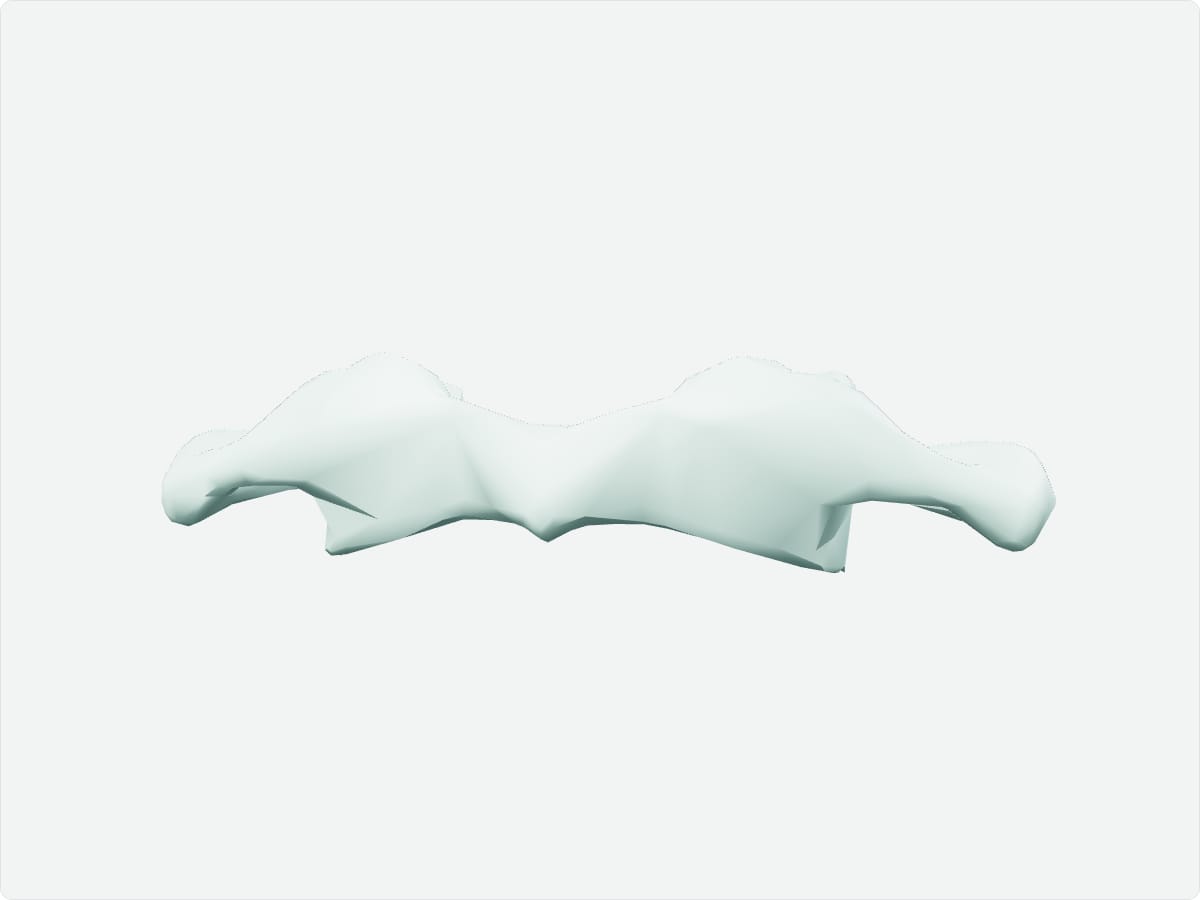
The atlas is the first cervical vertebra (C1). It is a ring-shaped bone with no vertebral body that supports the skull at the atlanto-occipital joints. It allows nodding of the head, while its articulation with the axis allows rotation.
Key facts
Type
Irregular bone (ring-shaped vertebra).
Location
Top of the vertebral column.
Landmarks
Anterior and posterior arches, lateral masses, superior and inferior articular facets, transverse processes, transverse foramina.
Articulations
Occipital condyles (atlanto-occipital joints) and axis (atlanto-axial joints).
Muscle attachments
Rectus capitis muscles, obliquus capitis muscles, levator scapulae, longus colli.
3D model: BodyParts3D (CC BY 4.0), adult male reference anatomy. Highlighted structure shown with nearby bones for context.
About the atlas (c1)
The atlas lacks a body because the body of C1 fuses with the axis to become the dens (odontoid process).
Clinical relevance
A burst fracture of the ring, called a Jefferson fracture, results from axial loading such as diving into shallow water.
Frequently asked questions
Why is the first cervical vertebra called the atlas?
It supports the skull, like the mythological Atlas who held up the sky.
What movement occurs at the atlanto-occipital joint?