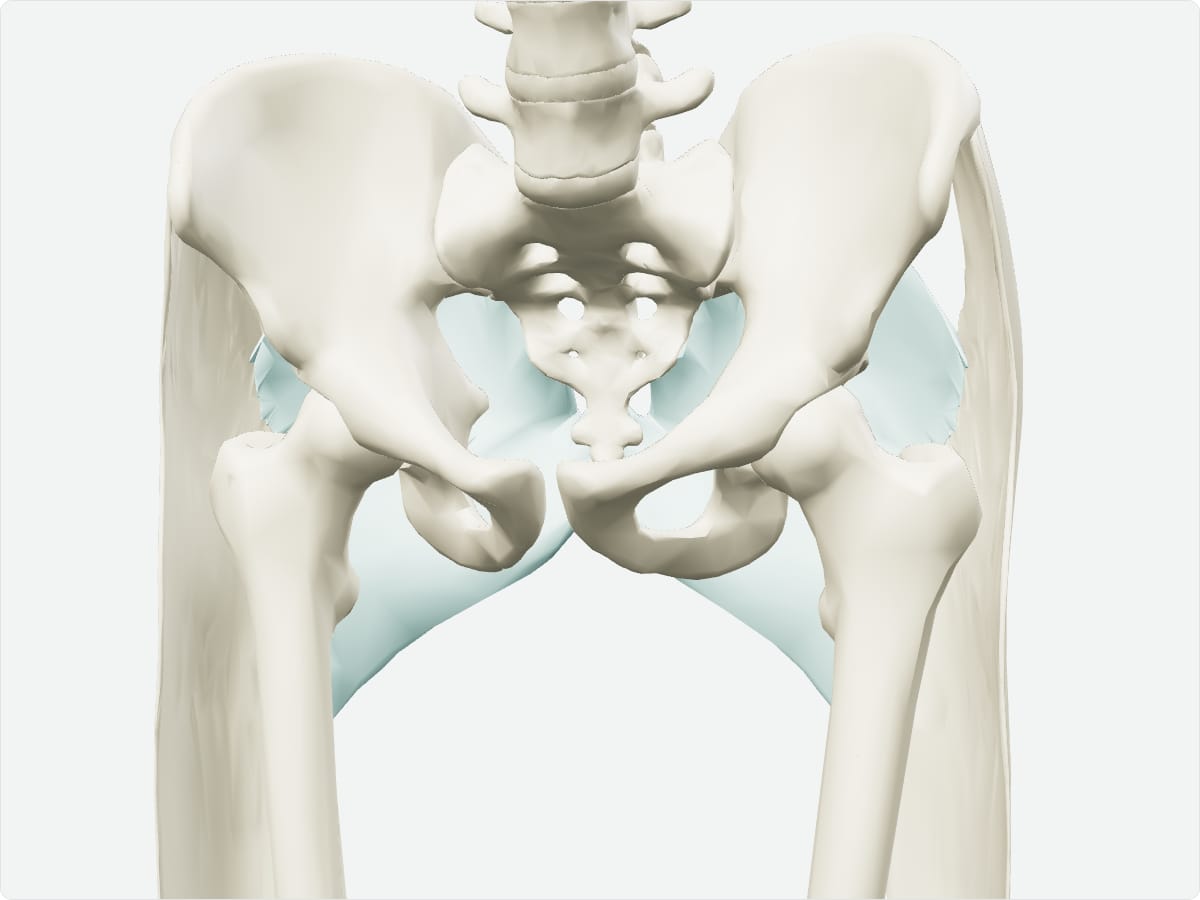
Gluteus maximus: origin, insertion, nerve supply and action
Also called: glutes, gluteus maximus muscle
Quick answer
The gluteus maximus is the largest and most superficial muscle of the buttock. It arises from the posterior ilium, sacrum, coccyx and sacrotuberous ligament and inserts on the gluteal tuberosity of the femur and the iliotibial tract. The inferior gluteal nerve supplies it, and it extends and laterally rotates the hip.
Key facts
Origin
Posterior gluteal line of the ilium, dorsal surface of the sacrum and coccyx, and the sacrotuberous ligament.
Insertion
Gluteal tuberosity of the femur (deep fibres) and the iliotibial tract (superficial fibres).
Innervation
Inferior gluteal nerve (L5-S2).
Blood supply
Superior and inferior gluteal arteries.
Action
Extends and laterally rotates the thigh; upper fibres assist abduction through the iliotibial tract. It is most active in rising from a seated position and climbing stairs.
3D model: BodyParts3D (CC BY 4.0), adult male reference anatomy. Highlighted structure shown with nearby bones for context.
About the gluteus maximus
The muscle is thick and quadrilateral and covers most of the other gluteal muscles and the sciatic nerve. Its lower border forms the gluteal fold.
Clinical relevance
Injury to the inferior gluteal nerve causes difficulty rising from a chair and climbing stairs, with a backward-leaning gait.
Frequently asked questions
What is the main action of gluteus maximus?
Hip extension and lateral rotation, especially against resistance such as climbing or standing up.